Geography
Our Geography Curriculum Overview
Our Geography curriculum follows a two-year rolling programme designed to meet the needs of our mixed-age classes.
Our Cycle A and Cycle B curriculum overviews show how geographical knowledge, skills and vocabulary are carefully sequenced throughout the school.
The documents below provide further information about what children learn and how geographical understanding progresses from Early Years to Year 6.
Geography Curriculum Documents
At Aldermaston C.E. Primary School, we believe Geography should inspire children to become curious, knowledgeable and responsible citizens who are fascinated by the world around them.
We want our children to develop a strong sense of place and an understanding of how people, places and environments are connected. Through exploring their immediate surroundings and the wider world, children learn to appreciate the diversity of landscapes, communities, cultures and environments that make our world such an interesting place.
Our Geography curriculum encourages children to ask questions, investigate places, use evidence and develop an increasingly sophisticated understanding of the world and their place within it.
We want children to think and work like geographers: observing, questioning, mapping, measuring, collecting and analysing information, and using what they discover to reach and communicate geographical conclusions.
We use Kapow Primary to support the teaching and learning of Geography. Our mixed-age curriculum follows a carefully sequenced two-year rolling programme, Cycle A and Cycle B, ensuring that children progressively build their geographical knowledge, skills and vocabulary throughout their time at Aldermaston.
Our Geography curriculum is built around the four interconnected areas identified within the National Curriculum:
-
Locational Knowledge
-
Place Knowledge
-
Human and Physical Geography
-
Geographical Skills and Fieldwork
These areas are woven throughout our teaching, enabling children to develop a secure understanding of geographical concepts and apply their learning in increasingly meaningful ways.
Our Curriculum Intent
Through our Geography curriculum, we aim to ensure that every child:
-
Develops a secure understanding of places, people and environments, beginning with their immediate locality and extending to the United Kingdom and the wider world.
-
Builds strong locational knowledge and increasingly detailed mental maps of the world.
-
Understands the physical and human processes that shape places and environments and recognises how these processes interact.
-
Develops geographical knowledge through meaningful enquiry, investigation and the interpretation of evidence.
-
Learns to think like a geographer by asking questions, recognising patterns, making connections and drawing informed conclusions.
-
Develops the geographical skills needed to observe, measure, collect, record, analyse and present information.
-
Becomes confident in using maps, atlases, globes, aerial photographs and digital mapping technologies, including Digimap For Schools.
-
Acquires and confidently uses an increasingly sophisticated range of geographical vocabulary.
-
Recognises similarities, differences and connections between places, communities and environments.
-
Appreciates the diversity of people, cultures, communities and landscapes across the world.
-
Understands important geographical issues, including climate change, sustainability, natural resources and the impact of human activity on the environment.
-
Develops the knowledge, understanding and confidence to become a responsible citizen who can contribute positively to their community and the wider world.
Our ultimate aim is for children to leave Aldermaston not simply knowing more about Geography, but thinking more geographically.
How Geography is Taught
Geography at Aldermaston is taught as a subject in its own right, with learning carefully sequenced so that children build upon their prior knowledge and develop increasingly secure geographical understanding.
Geography in Early Years
In our Early Years Foundation Stage (EYFS), the foundations of geographical learning are developed primarily through the Understanding the World area of learning.
Children begin by exploring their immediate environment, observing the natural world, recognising similarities and differences between places and developing an awareness of the wider world.
Through practical experiences, stories, exploration, discussion and outdoor learning, children develop the curiosity, language and observational skills that prepare them for more formal geographical learning in Key Stage 1.
Geography in Key Stages 1 and 2
From Year 1 to Year 6, we follow Kapow Primary's mixed-age Geography curriculum, organised into a two-year rolling programme.
Our curriculum is designed to ensure that children encounter a broad and balanced range of geographical knowledge, locations, processes and skills.
Learning is carefully sequenced so that children revisit and build upon important geographical concepts, developing greater depth of understanding as they progress through the school.
Our curriculum introduces children to a diverse range of places and environments, including the United Kingdom, Europe, North and South America and other regions of the world.
Through geographical case studies, children explore different physical environments, human communities and the relationships between people and places. These studies support the requirements of the National Curriculum while broadening children's understanding of the wider world.
Learning Through Geographical Enquiry
We place geographical enquiry at the heart of our teaching.
Rather than simply learning facts about different places, children are encouraged to investigate questions about the world around them.
They learn that geographers:
-
Ask meaningful questions about places, environments and processes.
-
Gather information through observation, fieldwork, maps and other sources.
-
Interpret evidence and identify geographical patterns and relationships.
-
Compare places and explore how they are connected.
-
Consider different explanations and perspectives.
-
Draw conclusions and communicate their findings using appropriate geographical language.
Through this approach, children develop both substantive knowledge (what we know about the world) and disciplinary knowledge (how geographers investigate and understand the world).
The Four Strands of Our Geography Curriculum
Our curriculum develops four interconnected strands of geographical learning.
1. Locational Knowledge
Children develop an increasingly secure understanding of where places are located, beginning with their local area and extending to the United Kingdom, Europe and the wider world.
They learn to identify and locate continents, oceans, countries, cities, regions and significant geographical features.
Through regular opportunities to use maps, globes, atlases and digital mapping technologies, children develop strong spatial awareness and increasingly detailed mental maps of the world.
2. Place Knowledge
Children investigate what places are like and develop an understanding of the geographical characteristics that make them distinctive.
They explore similarities and differences between places, considering physical features, human activity, landscapes, communities and environments.
Children are encouraged to recognise that places are complex, interconnected and continually changing.
3. Human and Physical Geography
Children explore the natural processes that shape our planet alongside the ways in which people live, work and interact with their environments.
They learn about geographical features and processes such as weather, climate, rivers, mountains, volcanoes, earthquakes and environmental change.
They also investigate human geographical features and processes, including settlements, land use, economic activity, trade and the distribution of natural resources.
Throughout their learning, children develop an understanding that human and physical geography are closely connected.
4. Geographical Skills and Fieldwork
Children are taught to investigate the world through observation, questioning, mapping, measuring, collecting information, analysing evidence and communicating findings.
They use a range of geographical tools and techniques, including maps, compass directions, photographs, field sketches and digital mapping.
These skills are revisited throughout the curriculum and become increasingly sophisticated as children progress through the school.
Our Mixed-Age Geography Curriculum: Cycle A and Cycle B
At Aldermaston, our mixed-age classes follow a two-year rolling programme, ensuring children access a broad, balanced and carefully sequenced Geography curriculum.
Cycle A
During Cycle A, children study a planned range of geographical topics and enquiries designed to develop their knowledge of places, geographical processes and the relationships between people and environments.
Each unit identifies the key geographical knowledge, skills and vocabulary children are expected to learn.
Cycle B
During Cycle B, children experience a complementary range of geographical studies that extend their understanding and provide further opportunities to apply and develop their geographical skills.
Together, Cycle A and Cycle B ensure children build upon prior learning, revisit important geographical concepts and develop increasing independence as geographical thinkers.
Our progression documents identify the key knowledge, geographical skills and subject-specific vocabulary taught throughout each cycle, demonstrating how children's learning develops from Early Years through to Year 6.
Please see our Geography Long-Term Overview and Progression Documents below for further information about the topics, knowledge, skills and vocabulary taught within each cycle.
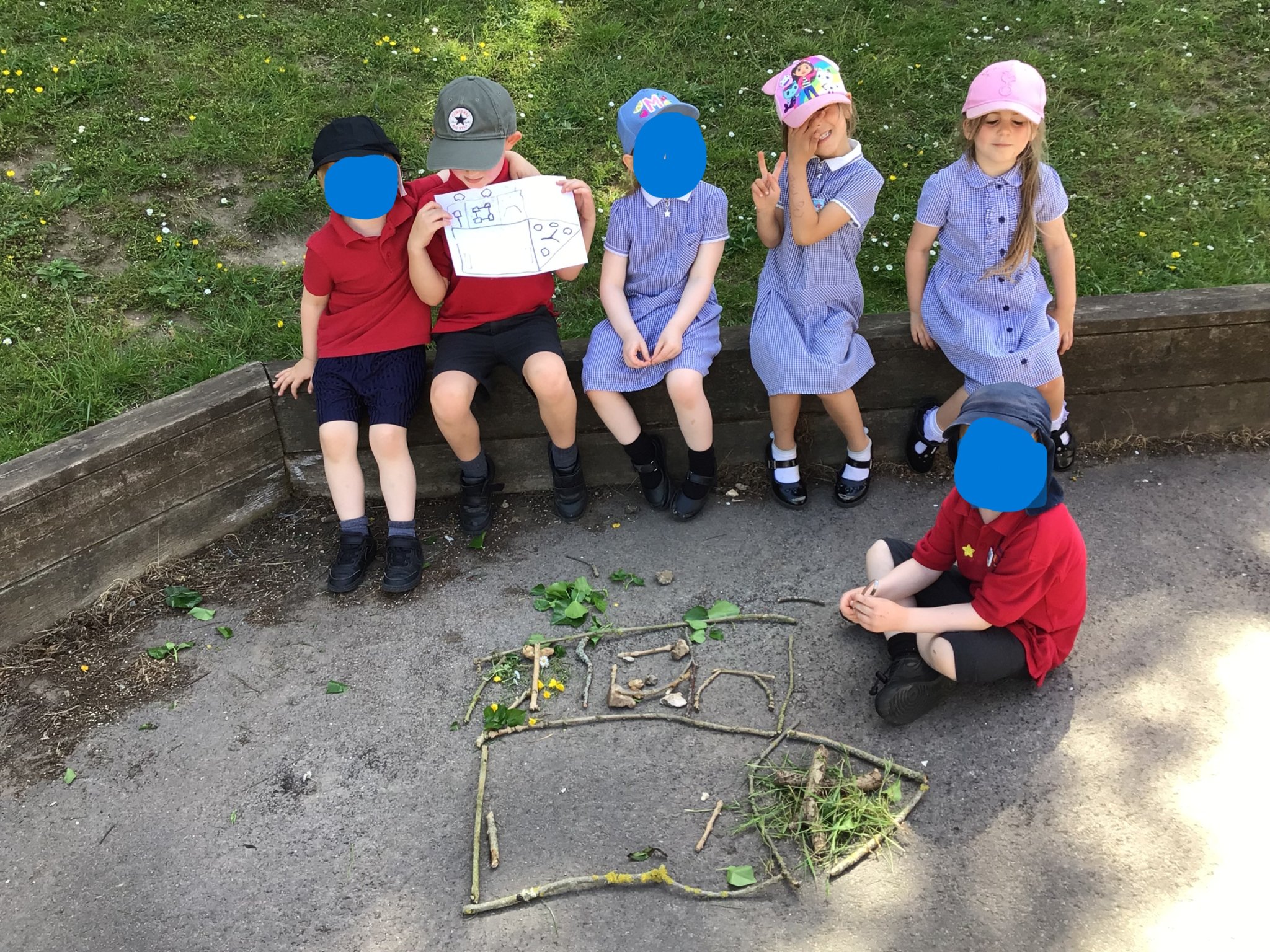
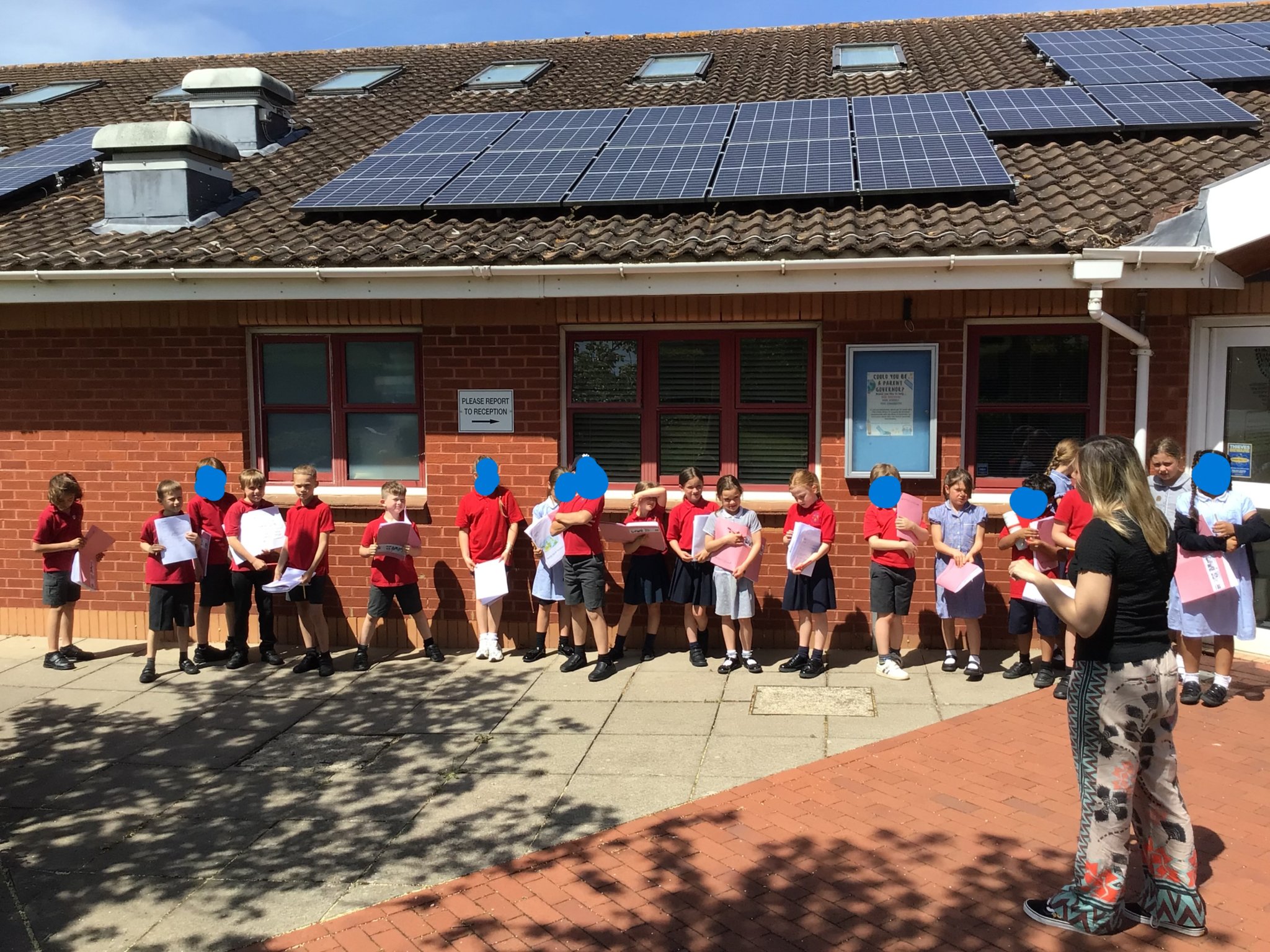
Fieldwork and Our Local Area
Our local area provides a rich and meaningful context in which children can practise geographical skills and apply their classroom learning to the real world.
At Aldermaston, we recognise that fieldwork is an essential part of learning how to think and work like a geographer.
It provides opportunities for children to investigate real places, gather first-hand evidence and develop a deeper understanding of their surroundings.
Throughout their time at school, children develop the skills to:
-
Observe and describe geographical features.
-
Ask questions and make predictions.
-
Collect information through surveys, observations and measurements.
-
Use maps, photographs and field sketches.
-
Identify patterns and relationships.
-
Record, present and analyse geographical information.
-
Draw conclusions from their findings.
Our school grounds, the village of Aldermaston and the surrounding environment provide meaningful opportunities for children to investigate both human and physical geography.
We also recognise the value of whole-school geographical fieldwork opportunities, allowing children to apply their learning, investigate their environment and experience Geography as an active, practical discipline.
As children progress through the school, fieldwork becomes increasingly sophisticated, enabling them to develop greater independence and confidence in carrying out geographical investigations.
Mapping, Digimap For Schools and Geography Across Our Curriculum
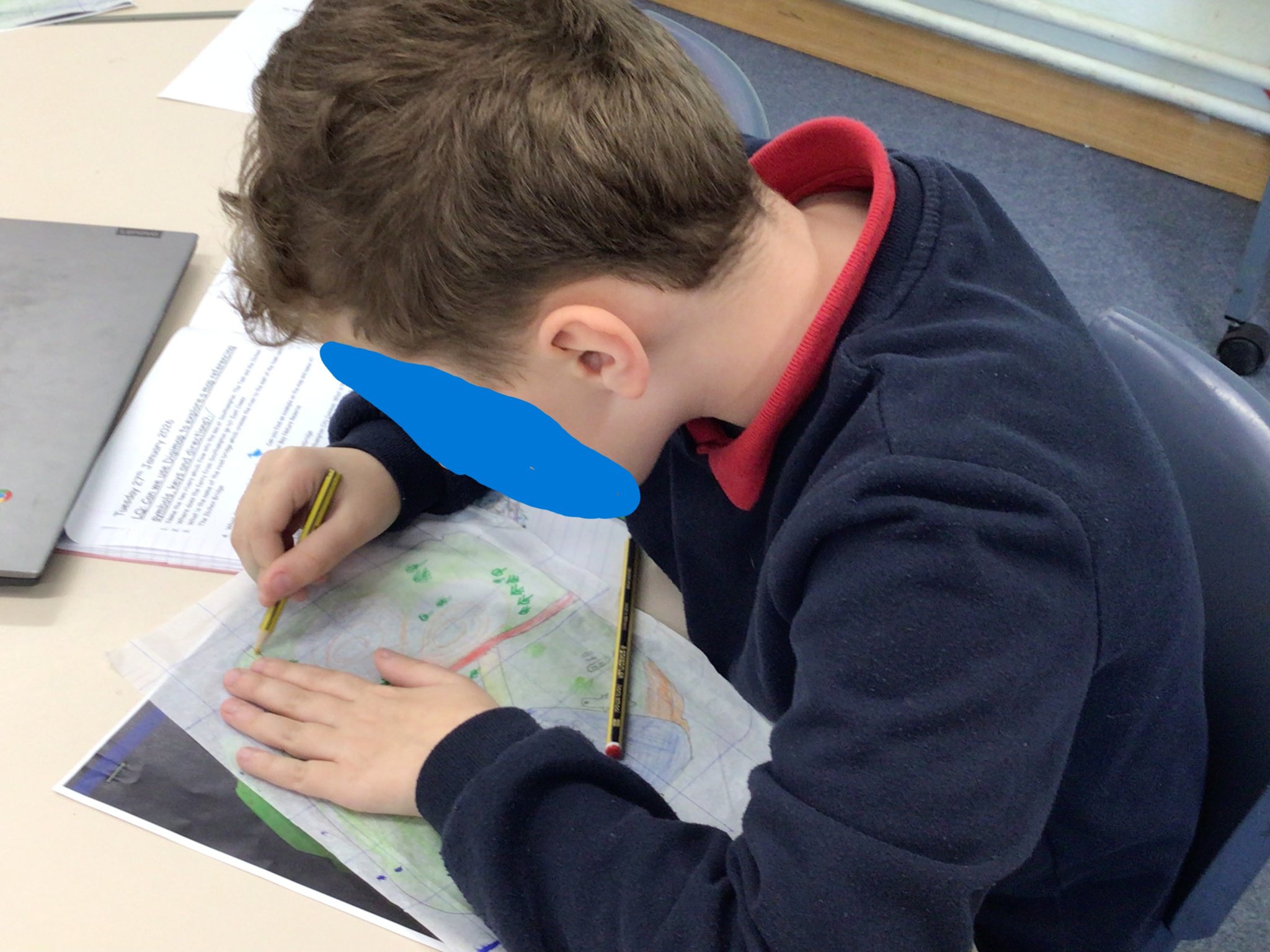
An important feature of Geography at Aldermaston is our emphasis on mapping and developing children's spatial awareness.
We want children to develop a genuine love of maps and recognise that mapping is a powerful tool for exploring, understanding and communicating information about our world.
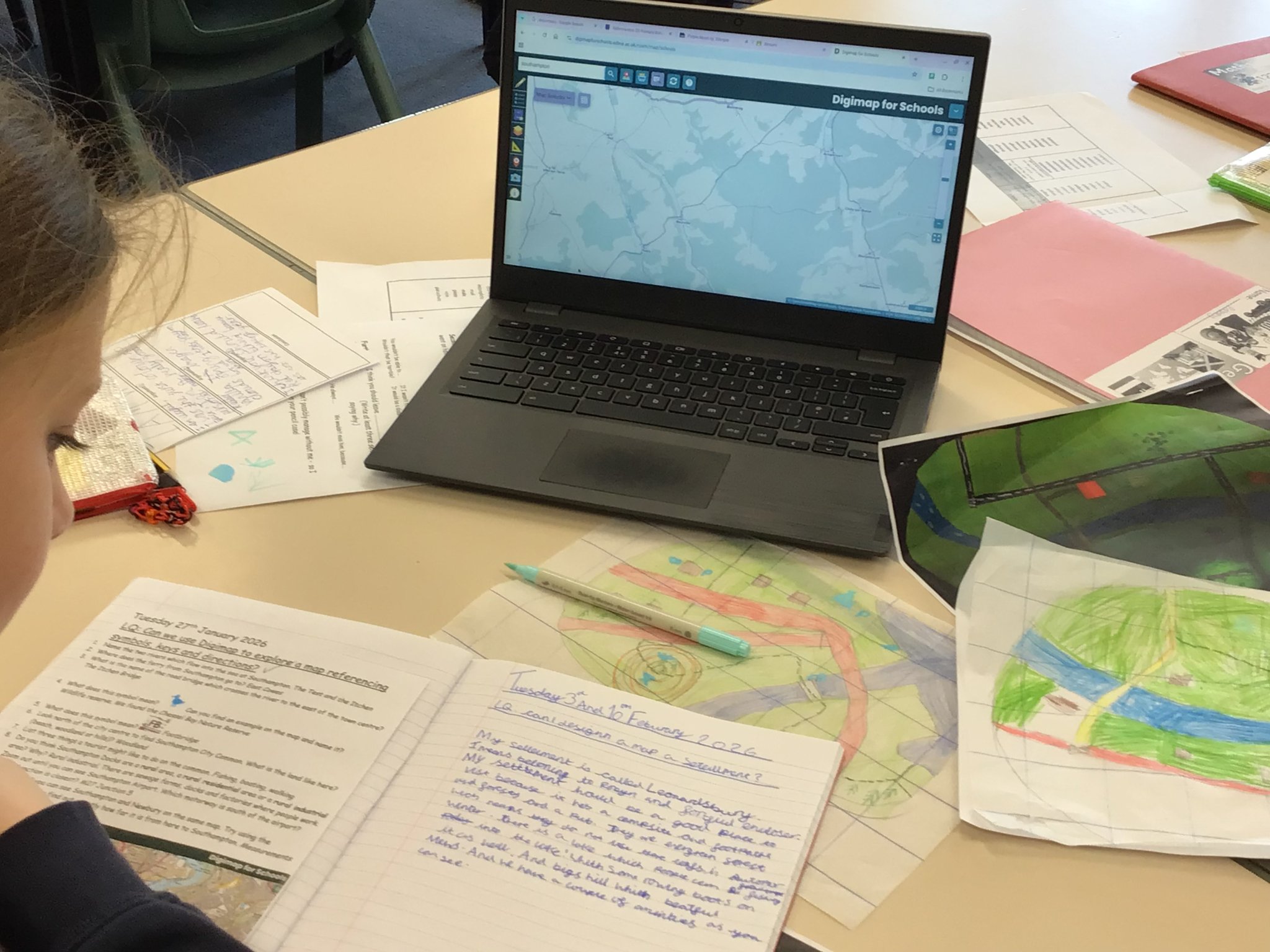
Alongside traditional resources such as atlases, globes, Ordnance Survey maps and aerial photographs, we use Digimap For Schools to support geographical learning.
This digital mapping resource provides opportunities for children to:
-
Explore maps of their local area, the United Kingdom and the wider world.
-
Investigate geographical features and patterns.
-
Compare places and environments.
-
Develop mapping and spatial awareness skills.
-
Use digital technologies to explore and communicate geographical information.
-
Make connections between geographical locations and learning across different subjects.
Geography Beyond the Geography Lesson
At Aldermaston, geographical thinking is not confined to Geography lessons.
We encourage children to use their geographical knowledge and mapping skills to deepen their understanding across the wider curriculum.
For example:
-
History: Locating historical events, settlements, civilisations and significant locations.
-
Science: Exploring habitats, environments, climate and human impact on the natural world.
-
French: Investigating the location, landscape, culture and geographical characteristics of French-speaking places.
-
Religious Education: Exploring places of religious significance and understanding the geographical contexts of different faith communities.
-
PSHE: Considering communities, sustainability, global citizenship and the connections between people and places.
Through these connections, children learn that Geography helps us understand not only where things happen, but also why location matters and how different aspects of our world are interconnected.
Our use of digital mapping supports the National Curriculum's expectations for geographical skills, including digital and computer mapping, while introducing children to ways in which geographical information can be explored and analysed through technology.
Assessment in Geography
Assessment is an ongoing part of our Geography teaching and helps teachers understand what children know, remember and can do.
Teachers use a range of approaches to assess children's geographical understanding, including:
-
Questioning and classroom discussion.
-
Retrieval activities that revisit prior knowledge.
-
Practical geographical enquiries and fieldwork.
-
Children's written and recorded work.
-
Mapping activities and the interpretation of geographical information.
-
Opportunities to explain, apply and communicate geographical understanding.
Assessment focuses on how securely children understand and remember the key geographical knowledge, skills and vocabulary identified within each unit.
This enables teachers to identify misconceptions, revisit important learning and adapt teaching to ensure all children can make progress.
We recognise that successful geographical learning involves not simply remembering facts but being able to make connections, apply knowledge and explain geographical patterns and processes.
Geography and Our School Values
Our Christian values of Curiosity, Compassion and Courage are woven throughout our Geography curriculum and help shape the way children explore and understand the world.
Curiosity – Exploring and Understanding Our World
Geography begins with curiosity.
We encourage children to ask questions such as:
-
Where is this place?
-
Why is it like this?
-
How has it changed?
-
What is it like to live there?
-
How are people and places connected?
-
What evidence can we find?
Children are encouraged to observe, question, investigate and explore.
Through geographical enquiry, they develop the confidence to ask meaningful questions and seek evidence-based answers.
In Geography, Curiosity means wanting to understand our world.
Compassion – Caring for People, Places and Our Planet
Geography helps children recognise that our world is home to many different people, communities and environments.
Through studying the relationships between people and places, children develop an appreciation of different experiences, cultures and perspectives.
They explore issues such as sustainability, climate change, natural resources, settlement, trade and human impact on the environment.
Children begin to understand how decisions made in one place can affect communities and environments elsewhere.
We encourage our children to develop respect for others, appreciate the natural world and recognise their responsibilities as global citizens.
In Geography, Compassion means caring for people, places and our planet.
Courage – Questioning, Investigating and Making a Difference
Geography encourages children to engage confidently with challenging questions about our changing world.
Children learn to consider evidence, question assumptions, discuss different viewpoints and think critically about possible responses to geographical issues.
Through fieldwork and enquiry, they are encouraged to work collaboratively, try unfamiliar approaches, solve problems and learn from findings that may challenge their initial ideas.
We want children to develop the courage to ask difficult questions, make informed choices and recognise how they can contribute positively to the world around them.
In Geography, Courage means having the confidence to question, investigate and act responsibly.
Geography and Our Christian Vision
“Life in all its fullness” – John 10:10
Our Christian vision inspires us to provide children with opportunities to flourish academically, personally and spiritually.
Geography contributes to this vision by helping children appreciate the richness, diversity and wonder of the world in which we live.
Through geographical enquiry, mapping, fieldwork and the study of people and places, children develop a deeper understanding of their own locality and their place within the wider world.
They learn that our world is interconnected and that the choices we make can have consequences beyond our immediate surroundings.
Geography encourages children to recognise both the beauty and complexity of our world, to appreciate different perspectives and to consider how they can contribute to a more compassionate and sustainable future.
We want our children to leave Aldermaston as curious explorers, compassionate global citizens and courageous thinkers, equipped with the knowledge, vocabulary, geographical skills and confidence to understand and engage thoughtfully with the world around them.
Ultimately, we want children to leave Aldermaston not only knowing more Geography, but thinking more geographically: asking questions, using evidence, understanding different places and perspectives, recognising connections and making informed choices about the world in which they live.